


 Ms. Samreen Shaikh
What if your food packaging could do more than just protect what’s inside? Imagine a package that can monitor freshness, detect spoilage, track its journey through the supply chain, and even communicate valuable product information with a simple scan. Once considered a futuristic concept, these capabilities are now becoming a reality through smart and intelligent food packaging.
Food packaging has always played a vital role in protecting products, preserving quality, ensuring food safety, and reducing food waste. However, conventional packaging systems are limited in their ability to monitor product conditions or provide real-time information throughout the supply chain. As consumer expectations grow and the demand for safer, more transparent, and sustainable food systems increases, packaging is evolving far beyond its traditional role.
Understanding Smart Packaging
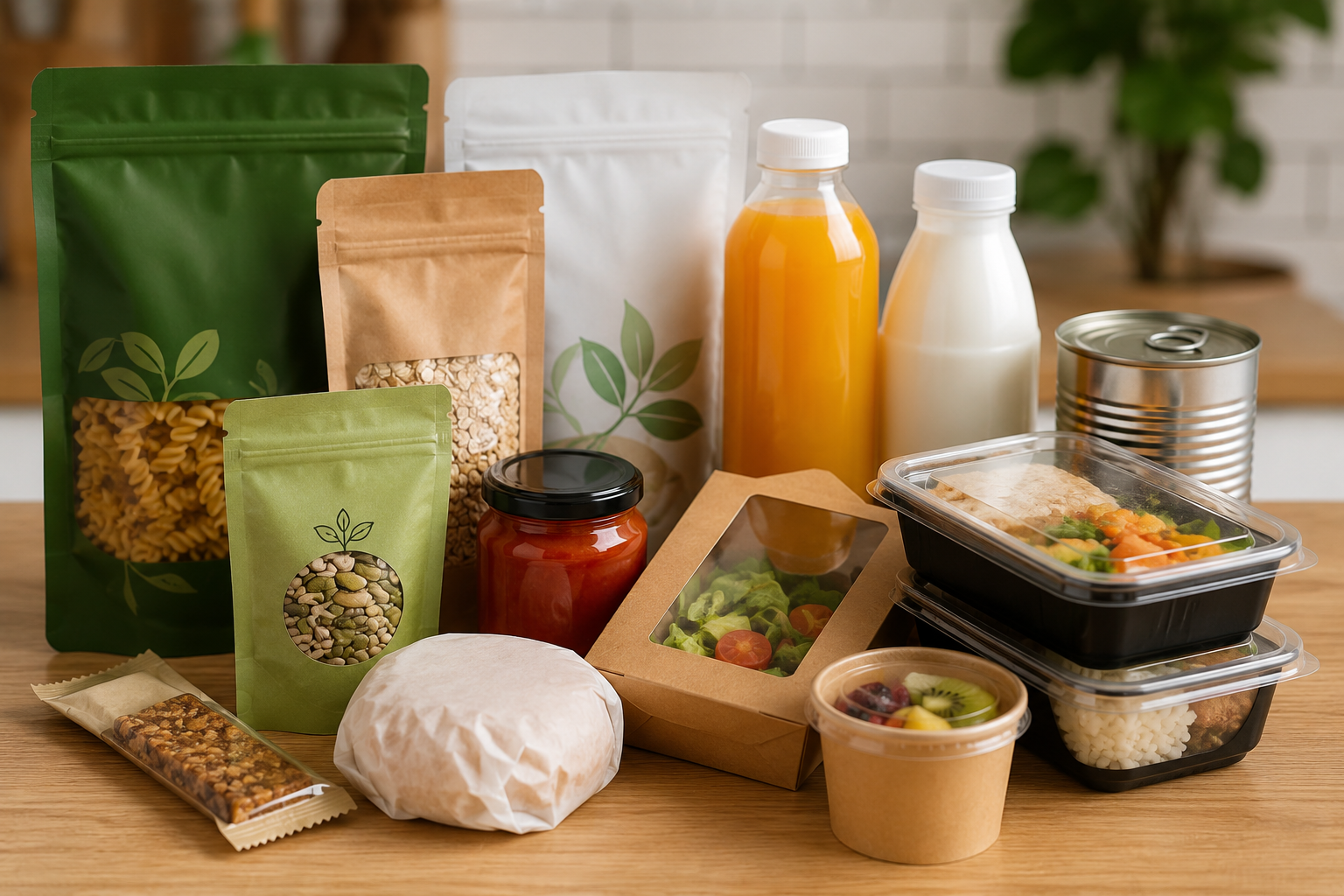
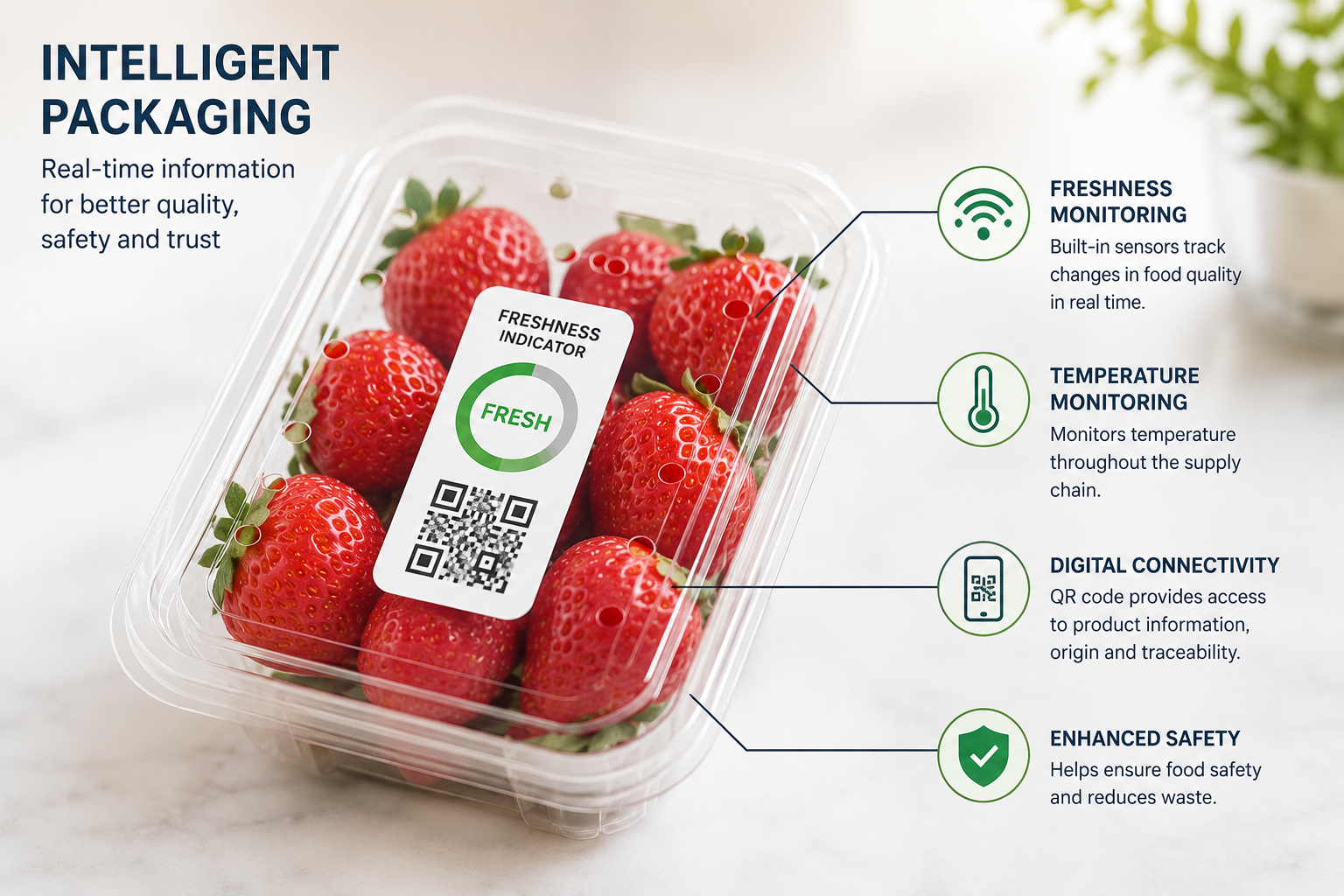
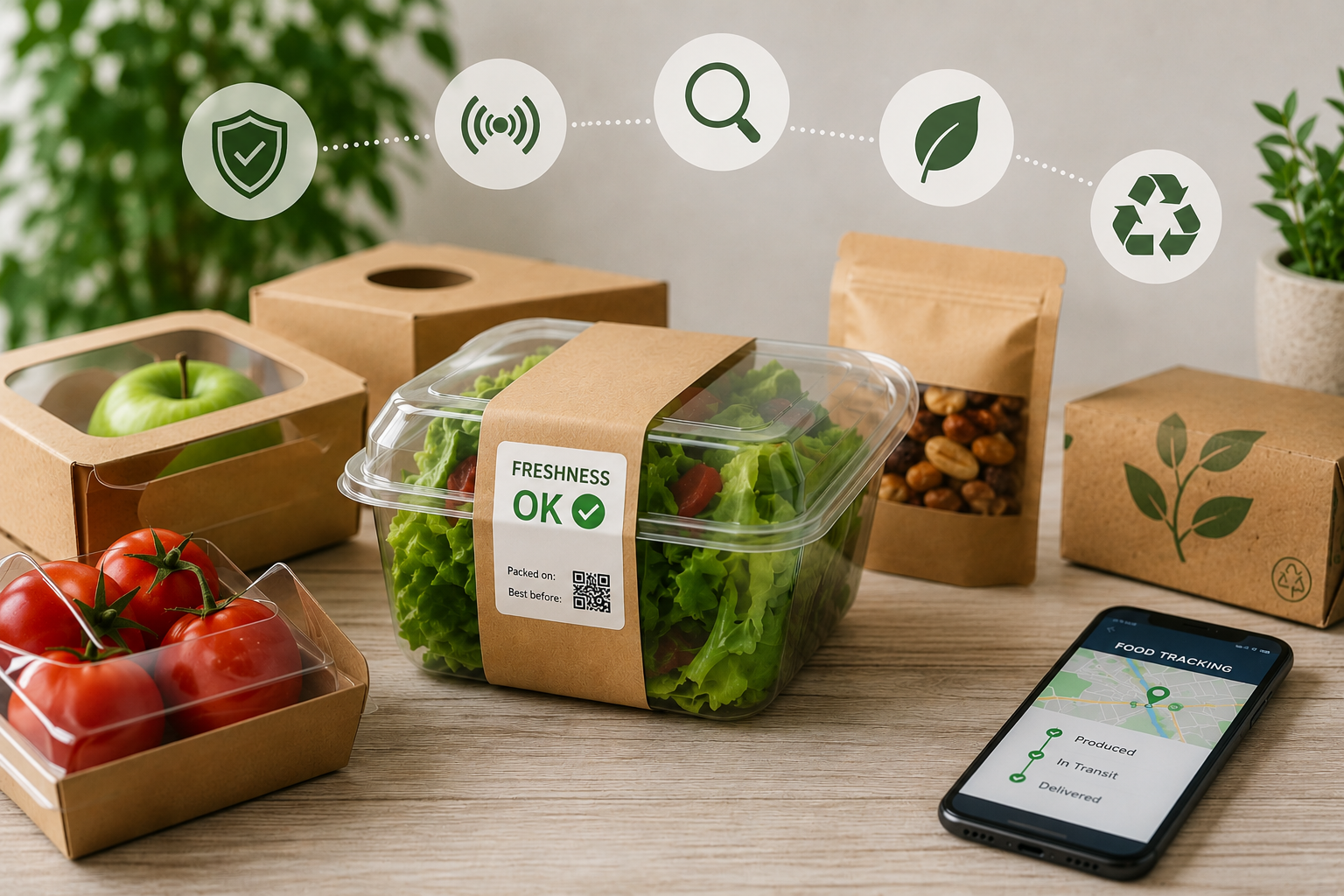
Smart packaging refers to packaging systems that go beyond the traditional role of containing and protecting food. By integrating technologies such as sensors, indicators, QR codes, and other digital tools, smart packaging can monitor product conditions, communicate information, and improve food quality, safety, and usability throughout the supply chain. It enables real-time monitoring of factors such as temperature, freshness, and product status while enhancing traceability from production to consumption. Smart packaging is broadly classified into two categories: active packaging, which interacts with the product or its surrounding environment to extend shelf life, and intelligent packaging, which monitors and communicates information about the condition of the product without altering it. By improving food safety, reducing waste, increasing supply chain visibility, and providing consumers with greater product transparency, smart packaging is transforming the way food products are packaged, distributed, and consumed.
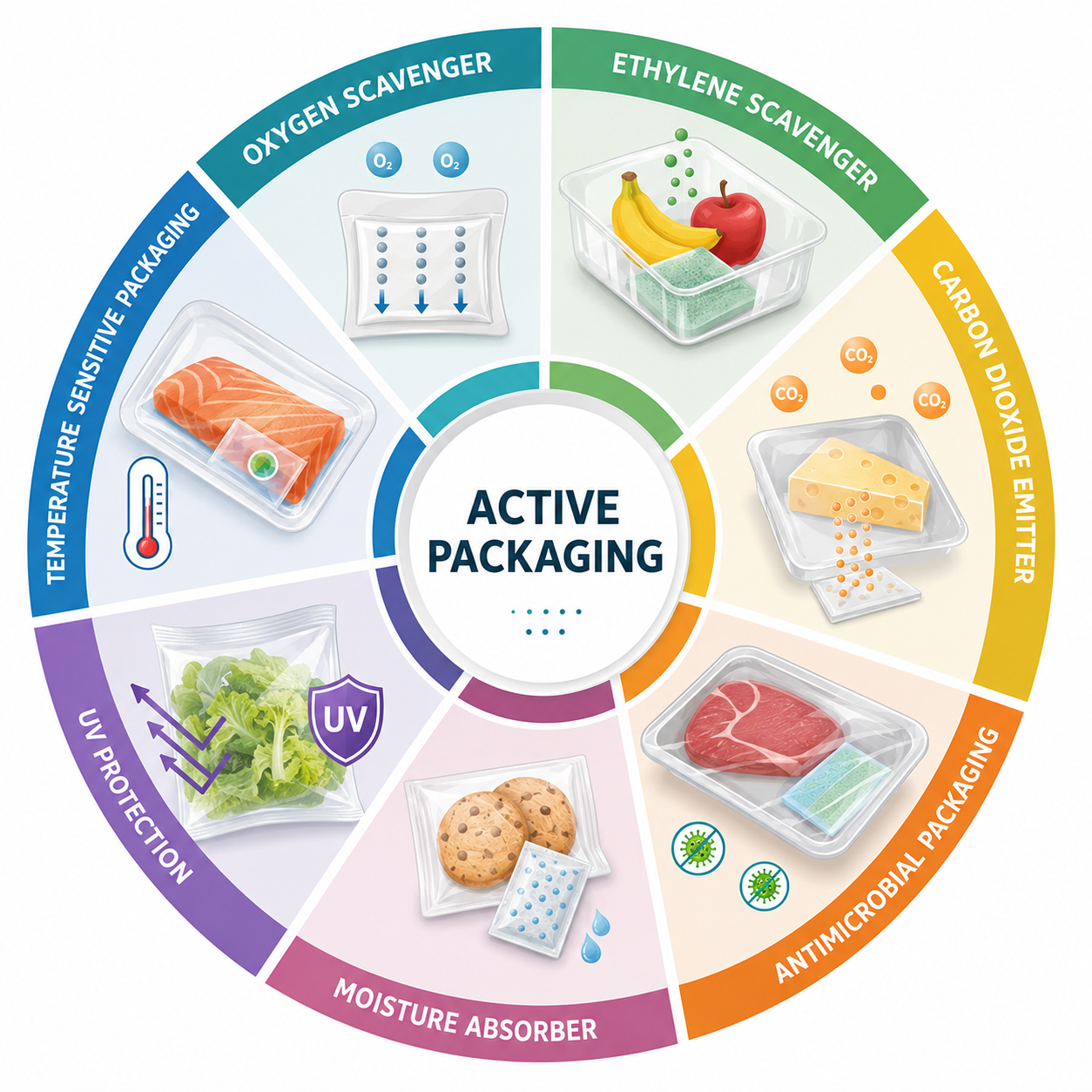
Active packaging is designed to interact with packaged food and its environment to slow food deterioration, thereby preserving freshness and reducing waste. Unlike traditional packaging, it can absorb unwanted substances or release beneficial compounds. Depending on the food, active packaging may include oxygen scavengers, moisture absorbers, ethylene scavengers, and carbon dioxide regulators to maintain optimal conditions. Technologies such as antimicrobial packaging help prevent spoilage, while antioxidant-releasing systems slow degradation. These components work together to enhance food quality, safety, and shelf life, making active packaging a key innovation in the food industry that promotes sustainability and reduces loss.
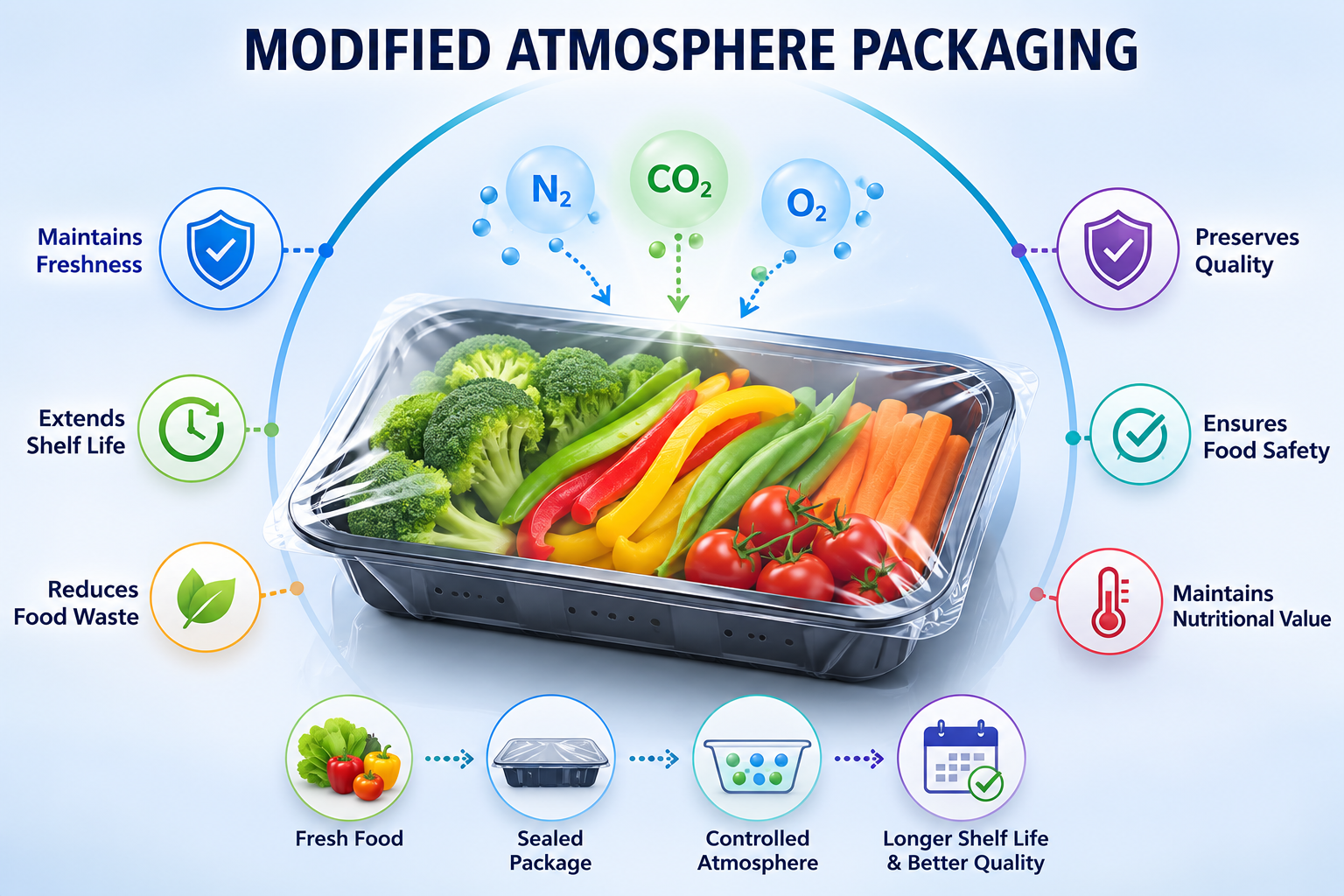
Modified Atmosphere Packaging (MAP) is a part of active packaging, which is a food preservation technique that extends shelf life by modifying the composition of gases inside a sealed package. Instead of normal air, the package atmosphere is adjusted using gases such as carbon dioxide (CO₂), oxygen (O₂), and nitrogen (N₂) in proportions that are suitable for the specific food product. This controlled atmosphere helps slow microbial growth, reduce oxidation, delay respiration in fresh produce, and preserve the sensory qualities of food, including its freshness, colour, texture, and flavour. The gas composition used in MAP varies depending on the type of food being packaged. CO₂ is commonly used to inhibit the growth of spoilage microorganisms; N₂ acts as an inert filler gas that prevents package collapse, while O₂ levels are carefully controlled to maintain the quality of certain fresh foods and prevent the growth of microorganisms. MAP is widely used for packaging fresh fruits and vegetables, meat, poultry, seafood, dairy products, bakery items, and ready-to-eat foods. By maintaining an optimal internal atmosphere, it helps reduce food waste, improve product quality, enhance food safety, and increase the storage and distribution life of food products.
How Intelligent Packaging is Revolutionising Industries
Intelligent packaging, a type of smart packaging, monitors the condition of packaged food and provides real-time information about its quality and safety without contacting the food. It tracks changes during storage and transportation, helping manufacturers, retailers, and consumers make informed decisions about freshness and usability. By focusing on the actual condition of food rather than expiry dates, it reduces waste and enhances food safety and traceability. Key technologies include data carriers (like barcodes and RFID tags) for identification and traceability, indicators that visually signal changes in quality, and sensors that detect physical or chemical changes. Although adoption is limited due to cost and technology challenges, growing consumer demand for safe and sustainable food is likely to drive the wider use of intelligent packaging. It strengthens cold chain monitoring, aids in early detection of deterioration, and increases consumer confidence by providing information about product origin, nutritional value, and sustainability.
Also, one recent example of sustainable packaging is Mother Dairy’s introduction of India’s first naturally degradable milk pouch. Designed to function just like conventional milk packaging during storage, transportation, and use, the pouch provides an environmentally responsible solution at the end of its life. Once discarded in soil, it naturally converts into bioavailable wax, which is further broken down by soil microorganisms into natural elements, leaving behind no microplastics or harmful residues. Importantly, the innovative packaging remains recyclable and does not compromise the milk’s quality, taste, or shelf life.
Challenges and Future Trends
Despite its immense potential, smart and intelligent packaging faces several challenges that limit its widespread adoption. The high cost of sensors, RFID systems, electronic components, and digital infrastructure makes large-scale implementation expensive. Ensuring the accuracy, stability, and long-term reliability of sensors under different storage and cold-chain conditions is another key challenge. Additionally, integrating electronic components with biodegradable and recyclable packaging materials while maintaining their mechanical and barrier properties remains difficult. Regulatory approvals, safety assessments of biosensors and nanomaterials, and varying global regulations, consumer concerns regarding data privacy and trust also influence adoption. Looking ahead, the future of smart packaging lies in the integration of Artificial Intelligence (AI), the Internet of Things (IoT), blockchain, and advanced nanomaterials. Future innovations will focus on hybrid packaging systems that combine active preservation with intelligent sensing, alongside greater use of biodegradable, recyclable materials to improve food safety, extend shelf life, and reduce environmental impact.
Conclusion
As the food industry continues to evolve, packaging is no longer just a protective layer; it is becoming an intelligent partner in ensuring food safety, quality, and sustainability. Smart and intelligent packaging is reshaping the way food is monitored, transported, and consumed by combining advanced technologies with real-time insights and enhanced traceability. While challenges such as cost, regulatory compliance, and technological integration remain, continuous innovations in AI, IoT, blockchain, and sustainable materials are paving the way for wider adoption. As these technologies become more accessible, they have the potential to significantly reduce food waste, strengthen consumer trust, and build more resilient and transparent food supply chains. The future of food packaging is not only smarter but also more connected, sustainable, and consumer-centric, making it a key driver of the next generation of food systems.
Reference
- https://www.frontiersin.org/journals/food-science-and-technology/articles/10.3389/frfst.2025.1665055/full
- https://accuz.com/smart-packaging-for-food-products/
- https://www.glenroy.com/blog/what-is-smart-packaging/
- https://www.thomasnet.com/insights/active-packaging/
- https://www.mdpi.com/2304-8158/14/15/2713
- https://pioneerphoenix.com/from-farm-to-fork-active-food-packaging/
- https://www.sciencedirect.com/topics/food-science/modified-atmosphere-packaging
- https://www.ametekmocon.com/knowledge/learnaboutmodifiedatmospherepackagingmap/whatismodifiedatmospherepackagingmap
- https://www.mdpi.com/2304-8158/8/1/16
- https://www.thomasnet.com/insights/intelligent-packaging/
- https://www.sciencedirect.com/science/chapter/edited-volume/abs/pii/B9780443247248000077
- https://www.sciencedirect.com/science/chapter/edited-volume/abs/pii/B9780443247248000077
- https://www.mdpi.com/2304-8158/14/24/4347
- https://economictimes.indiatimes.com/news/india/mother-dairy-launches-indias-first-naturally-degradable-milk-pouch-ahead-of-world-environment-day/articleshow/131458999.cms?from=mdr
 Dr. Kejal Joshi
 Dr Prabhakar Kanade


Add comment