



 Ms. Anuja N Padte
A few weeks ago, while walking through a local market, I noticed bright yellow sweets displayed prominently outside a shop. They looked attractive and fresh, exactly the kind of products that would catch a consumer’s attention. But as a food technologist, my first thought was not about taste—it was about whether the colour was natural, permitted, and safe.
This is the reality of food adulteration. Most consumers judge food by its appearance, aroma, and price. Unfortunately, these are often the very factors that unscrupulous operators exploit to sell adulterated food.
Although India has made significant progress in food safety regulations, food adulteration continues to be a concern across various food categories, including milk, spices, edible oils, ghee, sweets, and processed foods. While many food businesses operate responsibly, the presence of adulterated food products in the market remains a public health challenge.

What Exactly Is Food Adulteration?
In simple terms, food adulteration occurs when the quality, purity, safety, or authenticity of a food product is compromised. This may result from the addition, substitution, dilution, or removal of ingredients, the use of substandard raw materials, or the presence of extraneous matter that makes the food unsafe, sub-standard, or misbranded.
As per the Food Safety & Standards Act, 2006, an adulterant is any material that is or could be used to make food unsafe, sub-standard, misbranded, or containing extraneous matter.
Adulteration may be intentional, driven by economic gain through increased weight, improved appearance, or reduced costs. It may also occur unintentionally due to poor handling practices, environmental contamination, inadequate storage, or weaknesses in the supply chain. Regardless of the cause, adulteration compromises food quality, consumer trust, and public health.
Why Is Food Adulteration Still Common?
As someone working in the food sector, I believe the issue is far more complex than simply blaming manufacturers or traders.
India has one of the largest food supply chains in the world. Food moves through farmers, aggregators, processors, transporters, wholesalers, retailers, and finally consumers. At every stage, maintaining quality and traceability becomes a challenge.
Several factors contribute to adulteration:
- Price competition and pressure to reduce costs
- Fragmented supply chains
- Lack of awareness among consumers
- Inadequate technical expertise in some sectors
- Weak monitoring in informal markets
- Economic incentives for unethical practices
Food safety authorities conduct surveillance and testing regularly, but given the scale of the food industry, continuous vigilance is essential.
The Foods Most Frequently Affected
Milk
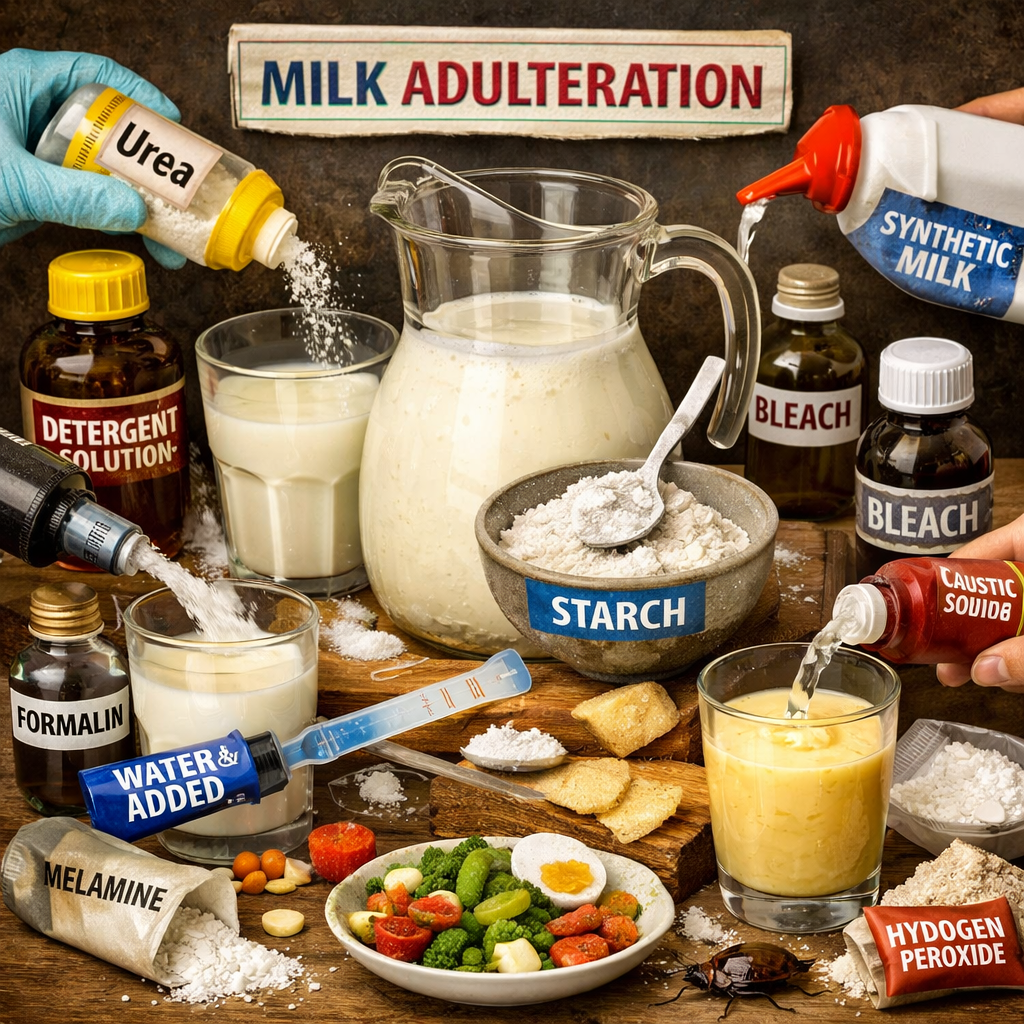
Milk remains one of the most adulterated food products in India.
Water is often added to increase volume, but more concerning adulterants such as detergents, urea, starch, and hydrogen peroxide have also been reported in various cases over the years.
The health effects can range from digestive discomfort to more serious concerns, particularly for children, elderly individuals, and those with weakened immunity.
Spices and Turmeric
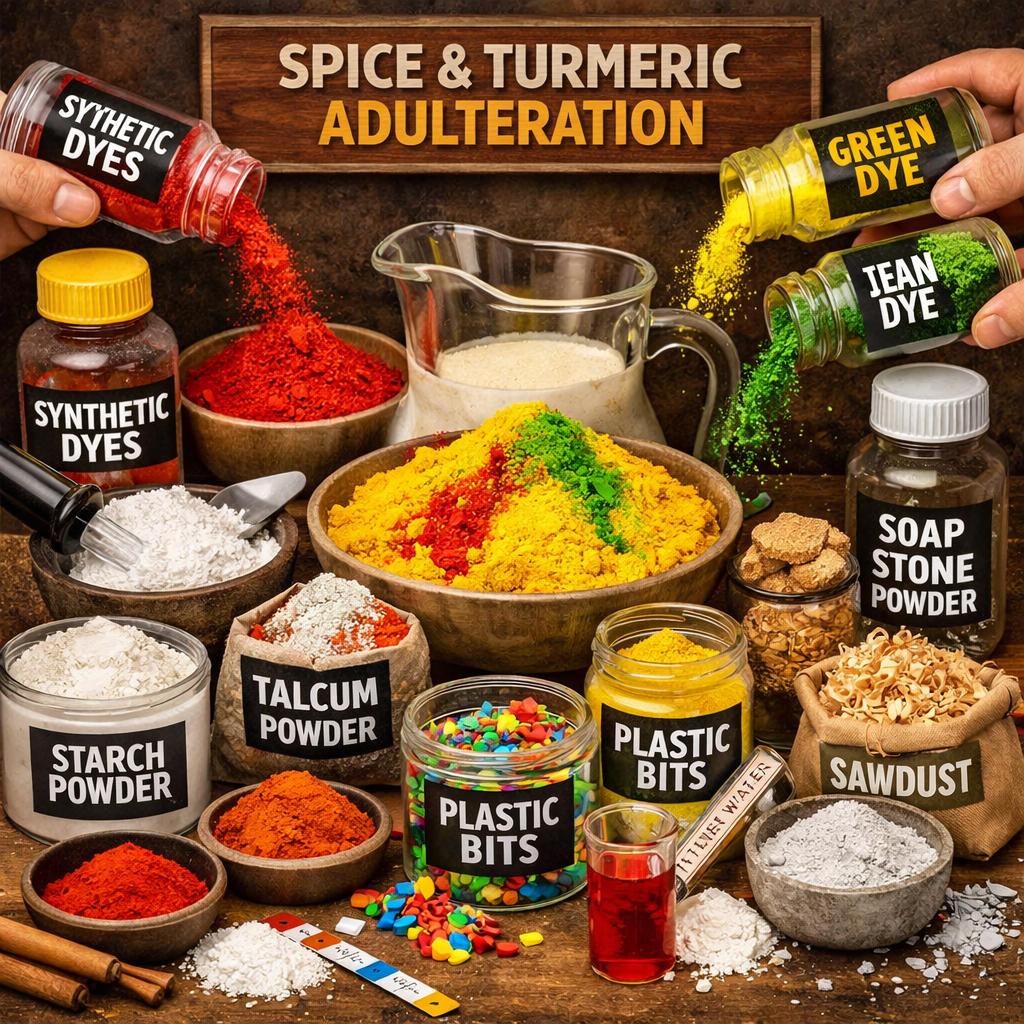
Spices are valued for their colour, flavour, and aroma. Unfortunately, these same characteristics make them vulnerable to adulteration.
Turmeric and chilli powder may be adulterated with synthetic colours, starches, or non-food materials to enhance appearance. Certain non-permitted dyes have been associated with toxic effects and long-term health concerns.
As consumers, we should be cautious of products that appear unnaturally bright or intensely coloured.
Black Pepper
One of the classic examples discussed in food technology classrooms is the mixing of papaya seeds with black pepper. Since the seeds resemble peppercorns in appearance, they can be used to increase volume and reduce costs.
While this may seem harmless, it represents economic fraud and compromises product quality.
Edible Oils
The adulteration of edible oils has historically led to some of India’s most serious food safety incidents.
Many food professionals still refer to the epidemic dropsy outbreak linked to argemone oil contamination as a reminder of how dangerous adulteration can become when public health is ignored.
Ghee
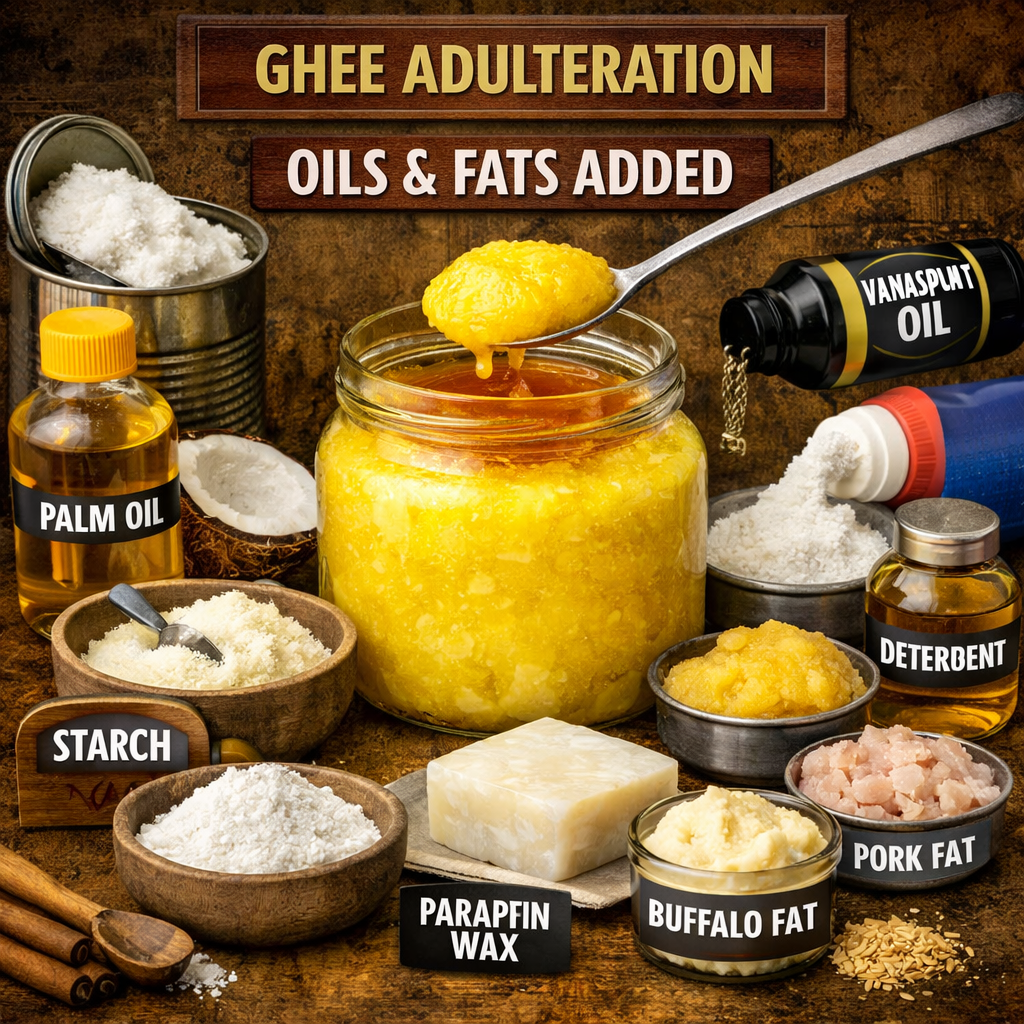
Ghee is highly valued in Indian households, which unfortunately makes it a target for adulteration.
Mixing cheaper fats, vanaspati, or other oils with ghee may increase profitability but significantly reduces authenticity and quality.
A Growing Concern: Industrial Dyes in Food
One area that deserves greater public attention is the misuse of industrial dyes in food products.
Certain synthetic dyes used in textile, leather, paper, and printing industries have no place in food. Yet from time to time, enforcement agencies continue to detect their presence in spices, sweets, snacks, and street foods.
Bright yellow foods are particularly vulnerable.
The challenge is that consumers often associate vibrant colours with freshness and quality. In reality, excessively bright colours can sometimes be a warning sign rather than an indicator of superior quality.
Long-term exposure to certain non-permitted dyes has been linked with liver damage, kidney toxicity, behavioural effects in children, and even potential carcinogenic risks.
The Role of Food Safety Regulations
India’s food safety framework has evolved considerably over the years.
The Food Safety and Standards Act, 2006 introduced a more scientific and risk-based approach to food regulation. Under this framework, the Food Safety and Standards Authority of India (FSSAI) develops standards, conducts surveillance, and works to strengthen food safety across the country.
However, regulations alone cannot eliminate adulteration.
Enforcement must be supported by industry responsibility, consumer awareness, laboratory capacity, and a strong food safety culture throughout the supply chain.
What Can Consumers Do?
While consumers cannot perform laboratory analysis at home, there are practical steps that can reduce risk:
- Purchase food from trusted and reputable sources.
- Check labels carefully before buying.
- Look for valid licensing and manufacturing details.
- Be cautious of products that appear unusually bright or are priced far below market value.
- Avoid purchasing loose products from unreliable sources.
- Report suspicious products to food safety authorities.
Most importantly, consumers should develop the habit of asking questions about the food they buy.
An informed consumer is often the strongest deterrent against food fraud.
Looking Ahead
Food adulteration is not a new problem, but it remains a relevant one. As food systems become more complex, the need for transparency, traceability, and scientific monitoring becomes even greater.
As food technologists, we often focus on regulations, testing methods, and quality systems. Yet the ultimate goal is much simpler: ensuring that the food reaching consumers is safe, authentic, and of the quality they expect.
Food safety is a shared responsibility. Regulators, manufacturers, retailers, scientists, and consumers all have a role to play.
Because at the end of the day, food should nourish people—not put their health at risk.


 Dr. Joseph Lewis


Add comment