


 Ms. Samreen Shaikh
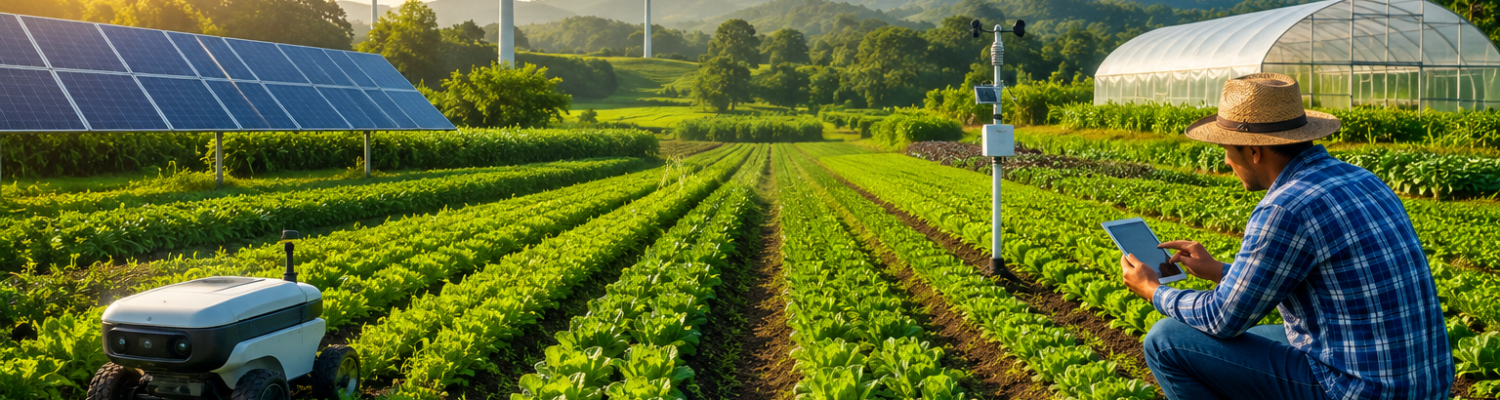
What if the biggest challenge of the future isn’t producing smarter gadgets, but producing enough food? As the global population races toward 9.7 billion by 2050, agriculture is under immense pressure to feed more people with fewer resources. Climate change, shrinking arable land, unpredictable weather, irregular rainfall and declining soil health are making farming increasingly difficult, putting global food security at risk.
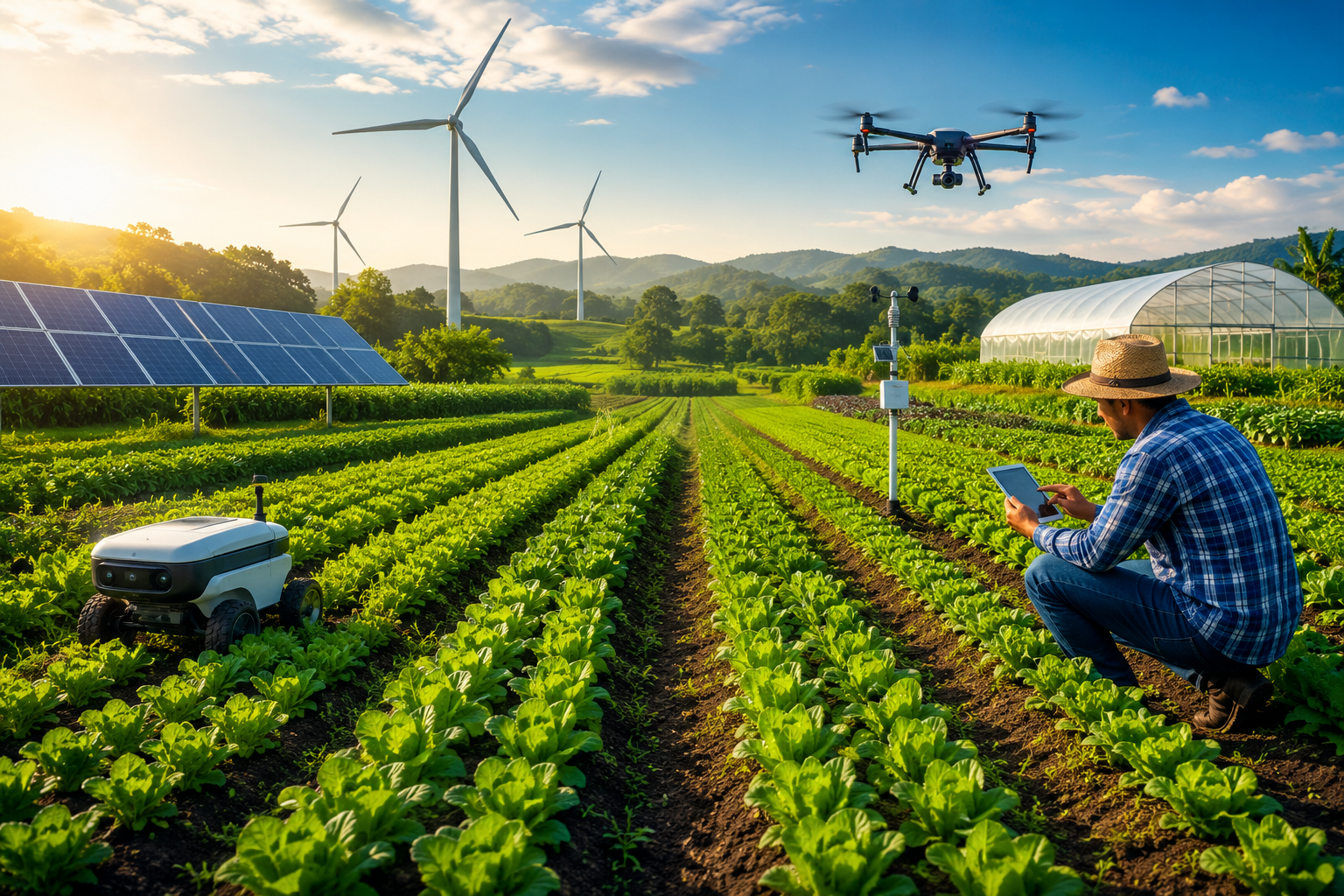
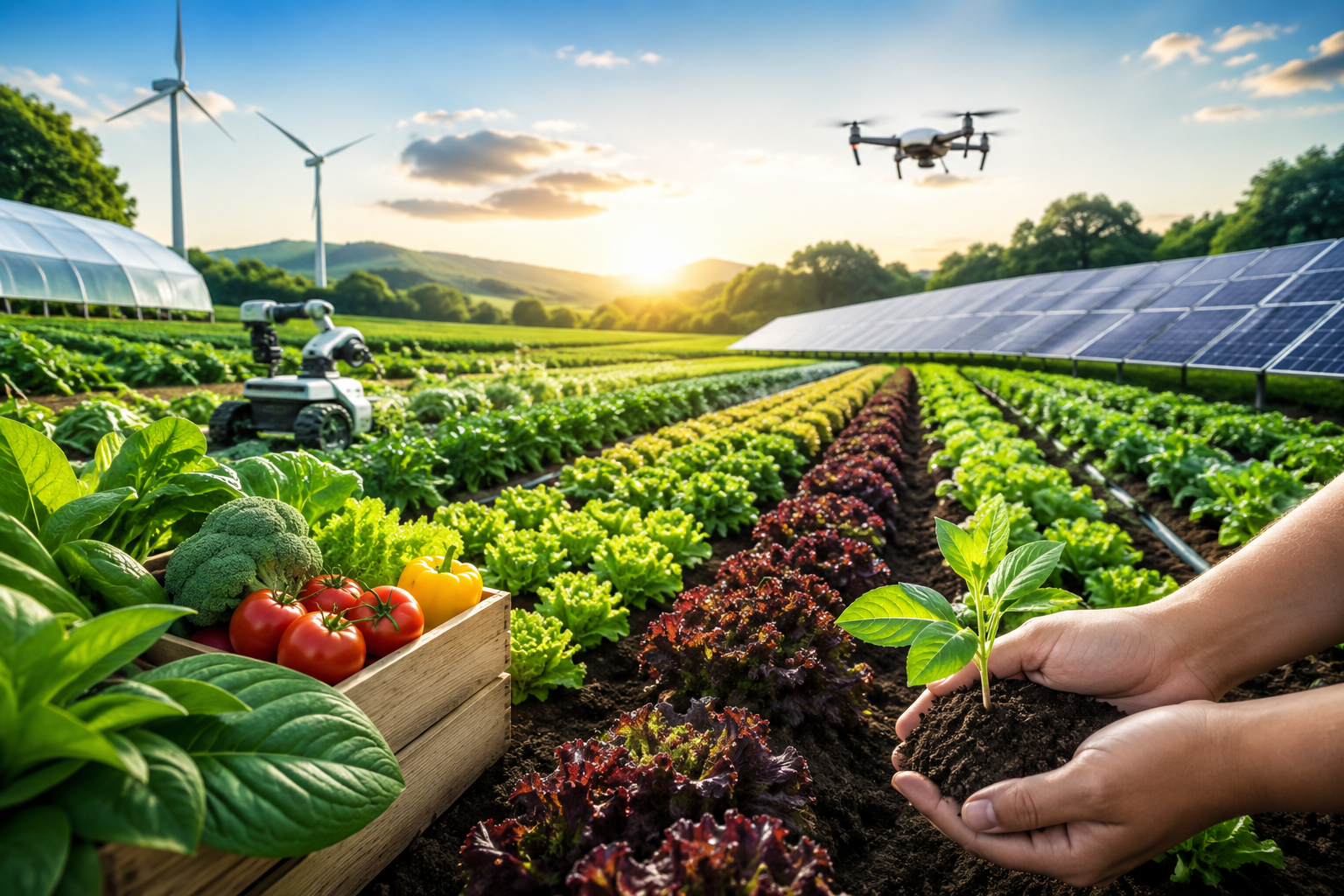
Fortunately, agriculture is entering a new era of innovation. From AI-powered crop monitoring and drones to smart irrigation systems, robotics, and vertical farming, modern technologies are transforming the way food is grown. These innovations enable farmers to use water, fertilisers, and land more efficiently while increasing productivity and reducing environmental impact. This approach, known as sustainable agriculture, is helping farmers grow more with less, offering a practical path toward a resilient, productive, and sustainable food system for the future.
What is Sustainable Farming?
Sustainable farming focuses on conserving natural resources while promoting environmentally friendly practices to ensure long-term food security. This approach includes practices such as crop rotation, agroforestry, and the efficient use of water and energy to improve productivity while protecting the environment. It also supports biodiversity, maintains soil health, and strengthens the resilience of agricultural ecosystems. By balancing economic growth, environmental protection, and social well-being, sustainable agriculture offers a practical and sustainable solution to global food challenges while helping preserve the planet for future generations. It is generally used for high-value food crops. Useful for cultivation in places where harsh winters are a challenge for agriculture.
Key Sustainable Agriculture Methods
There are many types of sustainable agriculture methods; some of them are listed below:
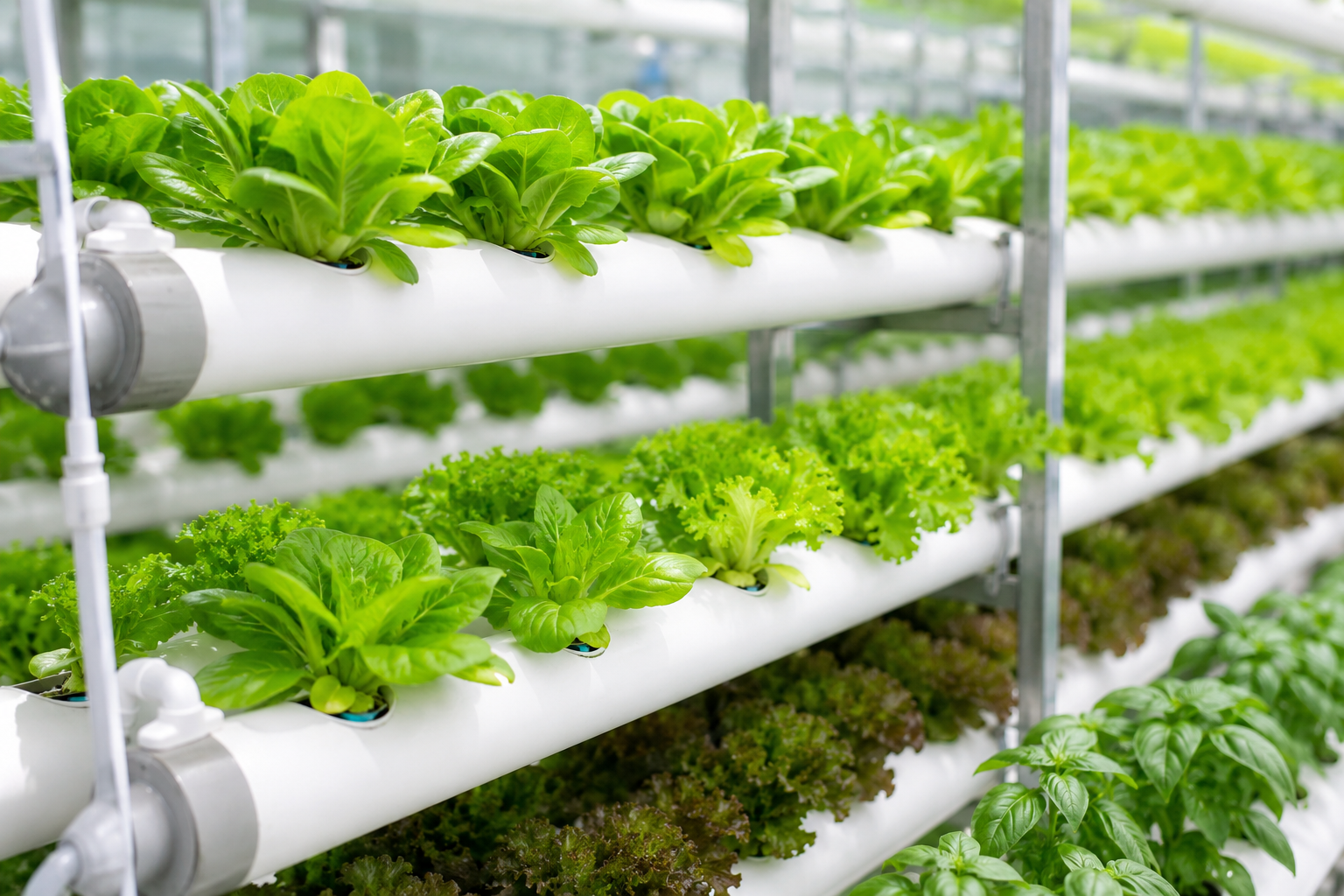
- Hydroponics – It is a modern method of growing plants without soil, where crops receive essential nutrients through a nutrient-rich solution. It uses less water, improves nutrient management, and helps crops grow faster in a controlled environment. When integrated with smart technologies such as IoT, sensors, automation, and AI, farmers can monitor plant health and growing conditions. Hydroponics also protects crops from harsh weather, pests, and soil-borne diseases while enabling year-round cultivation. It is best suited for fast-growing, high-value crops that require less space, such as lettuce, spinach, basil, mint, cherry tomatoes, and bell peppers, making it a sustainable and efficient farming method.
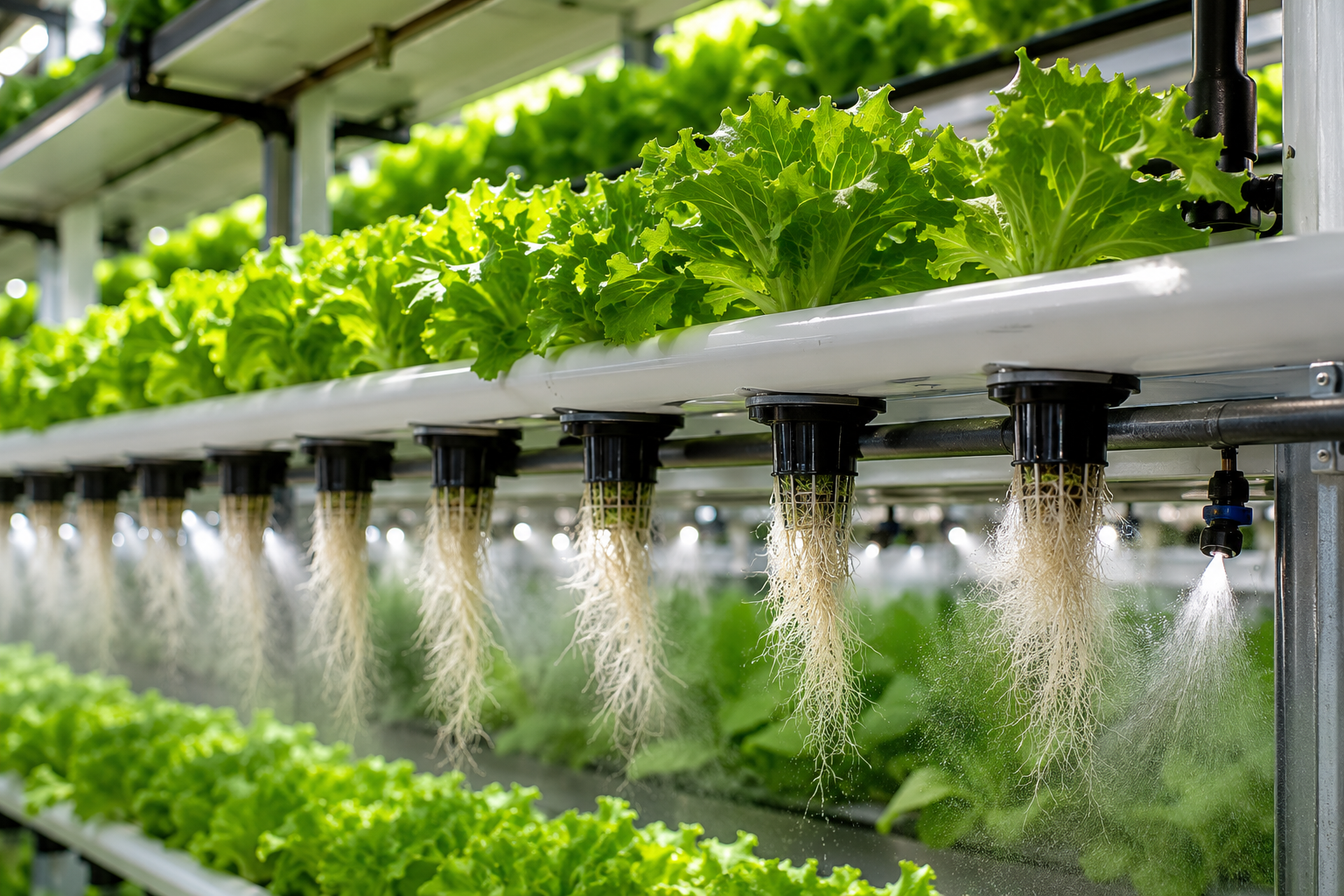
- Aeroponics – Aeroponics is a modern farming method in which plants are grown without soil, with their roots suspended in the air and regularly sprayed with a nutrient-rich spray. Unlike hydroponics, which uses water to feed plants, aeroponics delivers nutrients directly to the roots, helping plants grow faster while using less water. The system also saves space, supports vertical farming, and allows control over temperature, humidity, and nutrients for better crop growth. Because of its high yield, water and nutrient efficiency, year-round farming capability, and pest-free environment, aeroponics is becoming increasingly popular in countries such as India, New Zealand, and the UAE.
- Aquaponics – It is a sustainable farming method that combines aquaculture (fish farming) and hydroponics in one integrated system. In this closed-loop setup, fish waste is naturally converted into nutrients that help plants grow, while the plants filter and clean the water before it is returned to the fish tanks. This continuous cycle reduces water consumption, recycles nutrients efficiently, and minimises environmental impact. Aquaponics also supports the simultaneous production of fish and crops, making the best use of available resources.
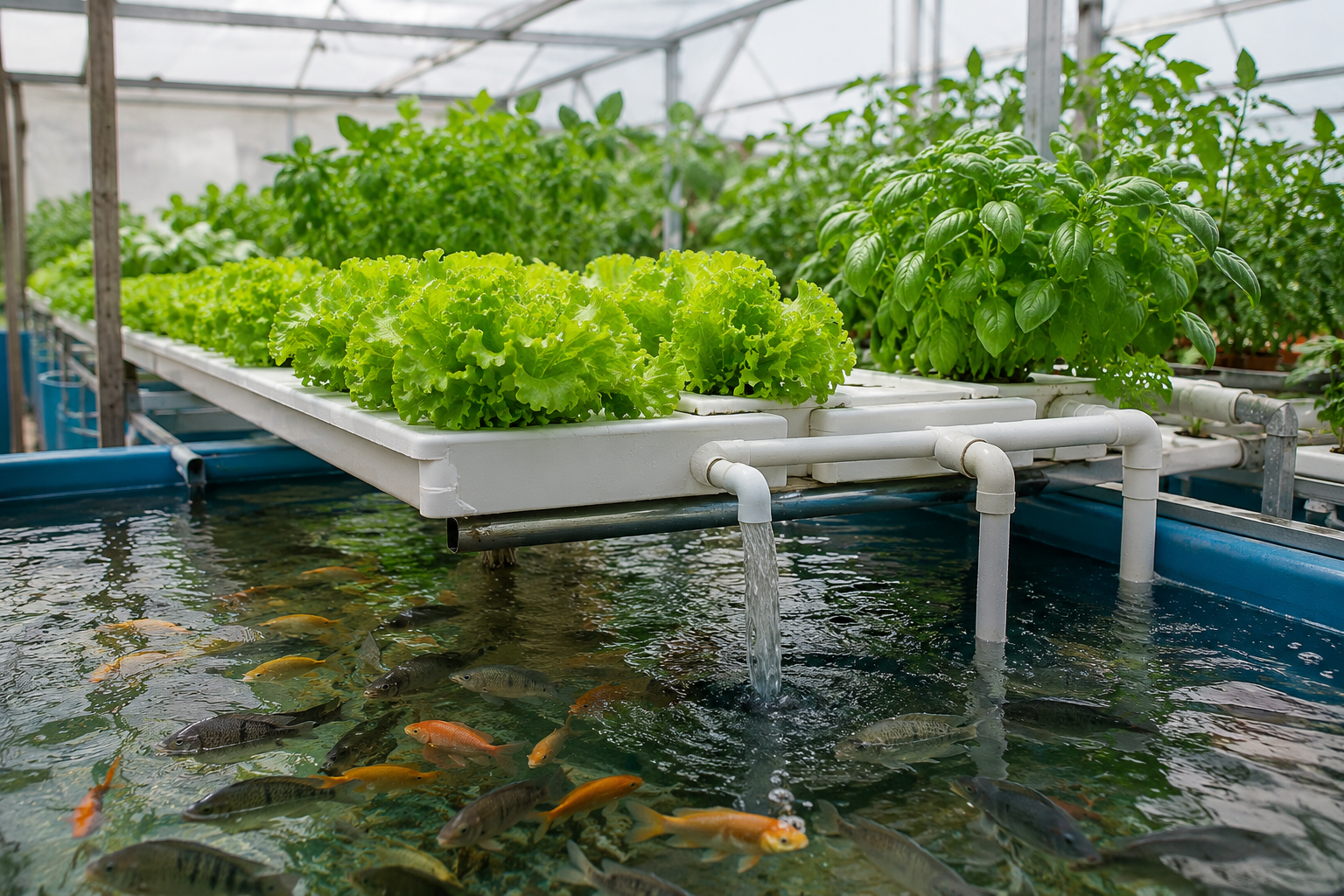
- Vertical Farming – Vertical farming is a modern agricultural technique in which crops are grown indoors in vertically stacked layers without using soil. It is a type of controlled environment agriculture that uses technologies such as hydroponics, aeroponics, LED lighting, automation, and AI to create ideal growing conditions. This method allows year-round crop production while using less water, land, and pesticides than traditional farming.
- Regenerative Agriculture – It is a sustainable farming approach that restores and improves soil health while protecting water resources, biodiversity, and the climate. It uses different farming techniques and innovative technologies to restore soil and protect the land’s ecosystem. This approach reduces the use of water and other inputs while preventing land degradation and deforestation. Practices such as crop rotation, composting, agroforestry, and reducing synthetic inputs help regenerate degraded land and improve soil quality.
- Precision Agriculture – It is a modern farming approach that uses data and technology to improve crop production and farming efficiency. It uses tools such as GPS, sensors, drones, satellite images, weather forecasting, and data analytics to monitor crops and soil in detail. Farmers use this information to understand field conditions and make better decisions. They can apply the right amount of water, fertiliser, and crop protection products at the right place and time. Precision agriculture also improves land use by managing different parts of a field based on their specific needs instead of treating the entire field the same. As a result, it increases crop quality, productivity, and profitability while supporting sustainable agriculture.
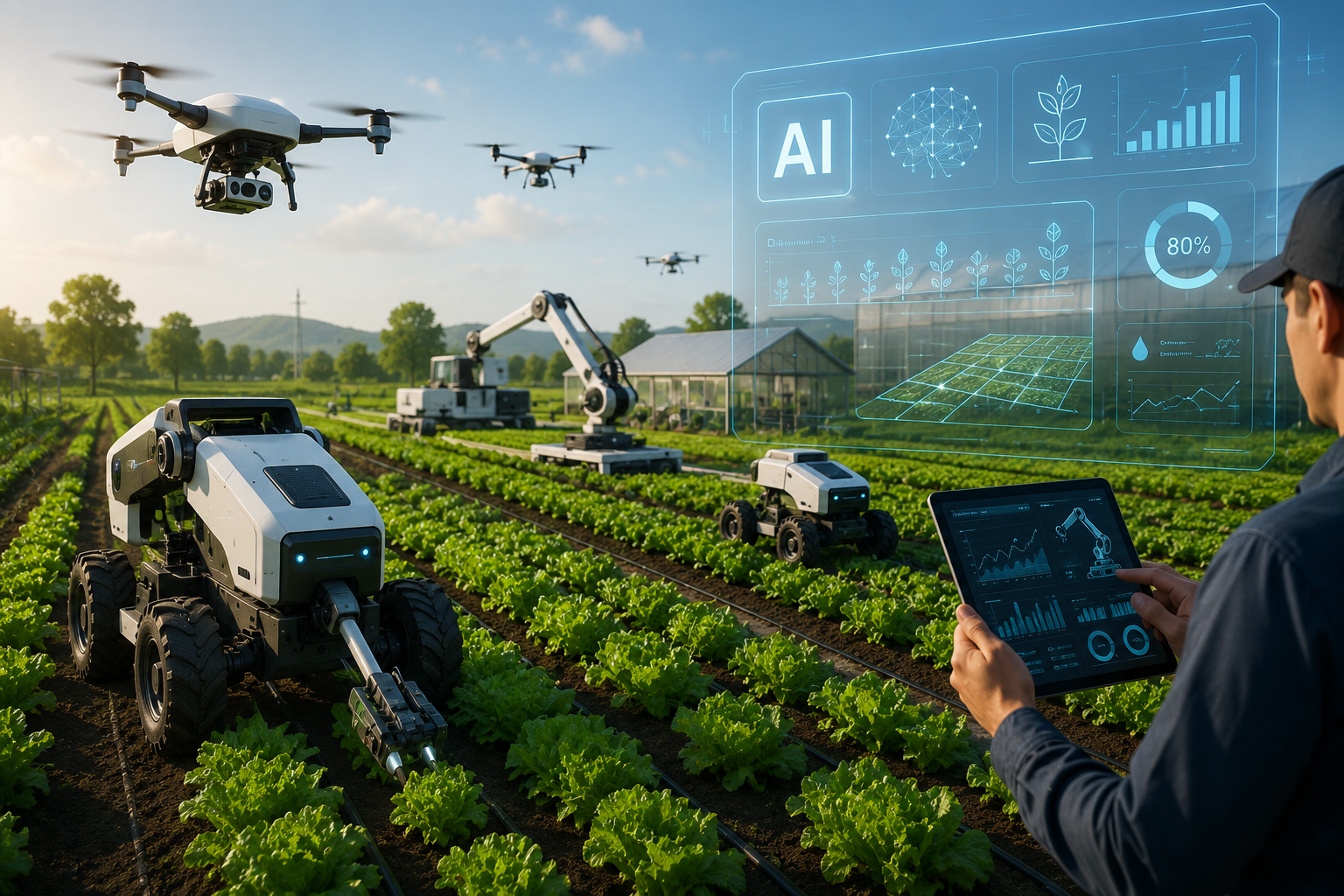
- AI & Robotics Agriculture – Agri-Robotics combines robotics, AI, and precision agriculture to make farming smarter, more efficient, and sustainable. It is helping farmers meet the growing demand for food while dealing with climate change and labour shortages. Unlike traditional machines, agricultural robots can sense their surroundings, make decisions, and adjust to different soil, crop, and weather conditions. These robots use sensors, motors, actuators, and software to collect data and perform tasks with little or no human intervention. Ground and aerial robots are used for crop monitoring, seeding, transplanting, weeding, fertilising, harvesting, and pruning. Automation allows these tasks to be completed more accurately and efficiently. For example, drones equipped with sensors and cameras can monitor crop health and navigate fields automatically.
- Plant Tissue Culture – Plant tissue culture is an advanced biotechnology technique performed under sterile (aseptic) conditions using nutrient-rich culture media. Plant tissue culture involves the cultivation of organised plant parts, such as shoot tips, roots, leaves, and embryos, to regenerate whole plants and is widely used for micropropagation, disease-free plant production, germplasm conservation, and crop improvement.
- Plant cell culture – It is a specialised branch of tissue culture that involves growing isolated cells, either on solid or liquid media. Cell culture is primarily used to produce valuable compounds such as proteins, antioxidants, pigments, flavours, pharmaceuticals, nutraceuticals, and other bioactive ingredients. It also supports genetic engineering, secondary metabolite production, and large-scale industrial manufacturing of high-value products.
Benefits, Challenges and Future Outlook
Sustainable agriculture offers many environmental, economic, and social benefits. It improves soil health by increasing soil organic matter, microbial activity, nutrient cycling, and water retention. Efficient irrigation and better soil moisture management help conserve water, while reducing the use of synthetic fertilisers and pesticides lowers pollution in rivers, lakes, groundwater, and soil. It also helps fight climate change by reducing greenhouse gas emissions, increasing carbon storage in soil, reducing tillage, and expanding tree cover. Economically, it lowers long-term costs for fertilisers, pesticides, irrigation, and fuel, provides more stable income through diversified farming, and creates opportunities to earn better prices from organic, residue-free, and locally grown produce. It also improves food security, healthier food systems, and farmer welfare. However, sustainable agriculture also faces several challenges. High initial investment, lack of training and awareness, limited market access, and insufficient policy and financial support can slow its adoption. Looking ahead, the future of sustainable agriculture lies in combining traditional knowledge with modern technologies to build more sustainable food systems.
Conclusion
As the demand for food continues to grow and environmental challenges become more severe, sustainable agriculture is no longer an option; it is a necessity. By combining traditional farming knowledge with modern technologies such as AI, precision farming, hydroponics, vertical farming, and robotics, we can produce more food while protecting our natural resources. Although challenges remain, greater awareness, investment, and supportive policies can accelerate adoption. The future of farming lies in building resilient, resource-efficient, and sustainable food systems that benefit both people and the planet.
Reference
- https://pmc.ncbi.nlm.nih.gov/articles/PMC12481170/#s12
- https://www.fondsdedotationroullier.org/en/blog/sustainable-agriculture-definition-principles-and-benefits/
- https://www.sciencedirect.com/science/article/pii/S2214662824001026#sec0020
- https://pmc.ncbi.nlm.nih.gov/articles/PMC10625363/
- https://www.nexsel.tech/blog/general-awareness/aeroponics-the-future-of-sustainable-farming-in-india-new-zealand-and-uae.php?srsltid=AfmBOoptrfuTHysy_ExXkwd5txqgcuLQVEQMbMT62P_8FlZ3D0hO3z9j
- https://www.agriculturejournal.org/volume12number3/aquaponics-advancements-a-comprehensive-exploration-of-sustainable-aqua-agriculture-practices-in-the-indian-context/
- https://masujournal.org/view_journal.php?id=679
- https://bioprotectionportal.com/resources/regenerative-agriculture-an-alternative-to-tackle-food-security-issues/?utm_source=google&utm_medium=cpc&gad_source=1&gad_campaignid=22470551435&gbraid=0AAAAApzdjeueQYKqzcTGrr1jhZJ4zn_Wp&gclid=Cj0KCQjw9ZLSBhCcARIsAEhGKgNo5vPwACW6mqW7asFi4icsF95JssmiQfJ4peO9XuQsJKCQV0aVSMkaAsKxEALw_wcB
- https://itworksconsulting.in/blogs/sustainable-agriculture-practices-benefits-challenges
- https://www.researchgate.net/publication/399176101_Plant_Tissue_Culture_Techniques_Principles_Methods_and_Applications
 Dr. Kejal Joshi
 Dr Prabhakar Kanade


Add comment