



 Ms. Anuja N Padte
In Part 1 of this series, we discussed what is food adulteration, why it persists and the risks to public health. We also explored how adulteration can affect commonly consumed foods such as milk, spices, edible oils, and ghee.
As a food professional, one question I am frequently asked is:
“How can I tell if the food I buy is adulterated?”
The honest answer is that food adulteration can only be conclusively confirmed through laboratory testing. However, consumers can play an important role in recognising warning signs, making informed purchasing decisions, and reporting suspicious products to the appropriate authorities.
The objective is not to become food inspectors at home but to become more aware and observant consumer

Start With Your Senses—But Don’t Stop There
For loose foods such as grains, spices, fruits, vegetables, and products sold in open markets, our senses can often provide the first clues about quality. Unusual colour, odour, texture, or the presence of foreign matter may indicate poor quality or possible adulteration.
However, today’s consumers increasingly purchase packaged foods, where adulteration cannot always be detected through visual inspection alone. In such cases, consumers should pay attention to the overall condition of the product and its packaging.
Some warning signs that warrant caution include:
- Torn, leaking, swollen, or visibly tampered packaging
- Evidence of product leakage or contamination
- Unusual appearance, colour, odour, or texture of the product after opening
- Products sold at unusually low prices compared to similar products in the market
- Products purchased from unknown or unreliable sources
While these observations cannot confirm adulteration, they may indicate that the product’s quality or integrity has been compromised.
For packaged foods, purchasing products from reputable companies, established brands, and authorised retailers remains one of the most effective ways to minimise risk.
Milk: A Product That Deserves Extra Attention
Milk remains one of the most adulterated food products due to its high demand and daily consumption.
Simple dilution with water has historically been one of the most common forms of adulteration. Other adulterants such as starch, detergents, urea, and neutralisers have also been reported in various cases over the years.
However, consumers should remember that adulteration may not always result in noticeable changes in the appearance, taste, or texture of milk. Even small quantities of adulterants can be detected through laboratory testing, while they may not be obvious to consumers.
For this reason, purchasing milk from reputable brands and authorised vendors remains one of the most effective ways to reduce risk.
Milk: A Product That Deserves Extra Attention
Milk remains one of the most adulterated food products due to its high demand and daily consumption.
Simple dilution with water has historically been one of the most common forms of adulteration. Other adulterants such as starch, detergents, urea, and neutralisers have also been reported in various cases over the years.
However, consumers should remember that adulteration may not always result in noticeable changes in the appearance, taste, or texture of milk. Even small quantities of adulterants can be detected through laboratory testing, while they may not be obvious to consumers.
For this reason, purchasing milk from reputable brands and authorised vendors remains one of the most effective ways to reduce risk.
Turmeric Powder
Turmeric naturally possesses a rich golden-yellow colour. However, if it appears unusually bright, fluorescent, or inconsistent in colour, consumers should exercise caution.
Artificial colours and non-permitted dyes have occasionally been detected in spices to enhance visual appeal. While appearance alone cannot confirm adulteration, unusually coloured products may warrant closer scrutiny and should preferably be purchased from trusted sources.
Chilli Powder
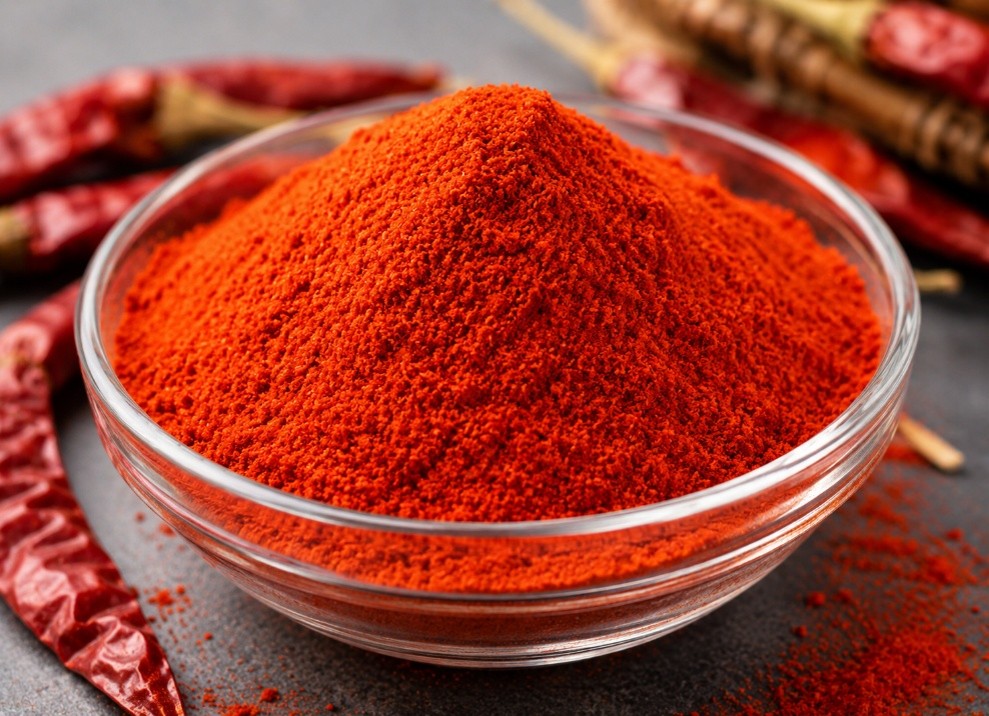
Similarly, chilli powder should have a natural red colour rather than an artificial-looking brightness. Excessively bright or unusually coloured chilli powder may indicate the possible use of added colourants.
Although visual inspection cannot confirm adulteration, consumers should remain cautious and purchase spices from reputable manufacturers and retailers.
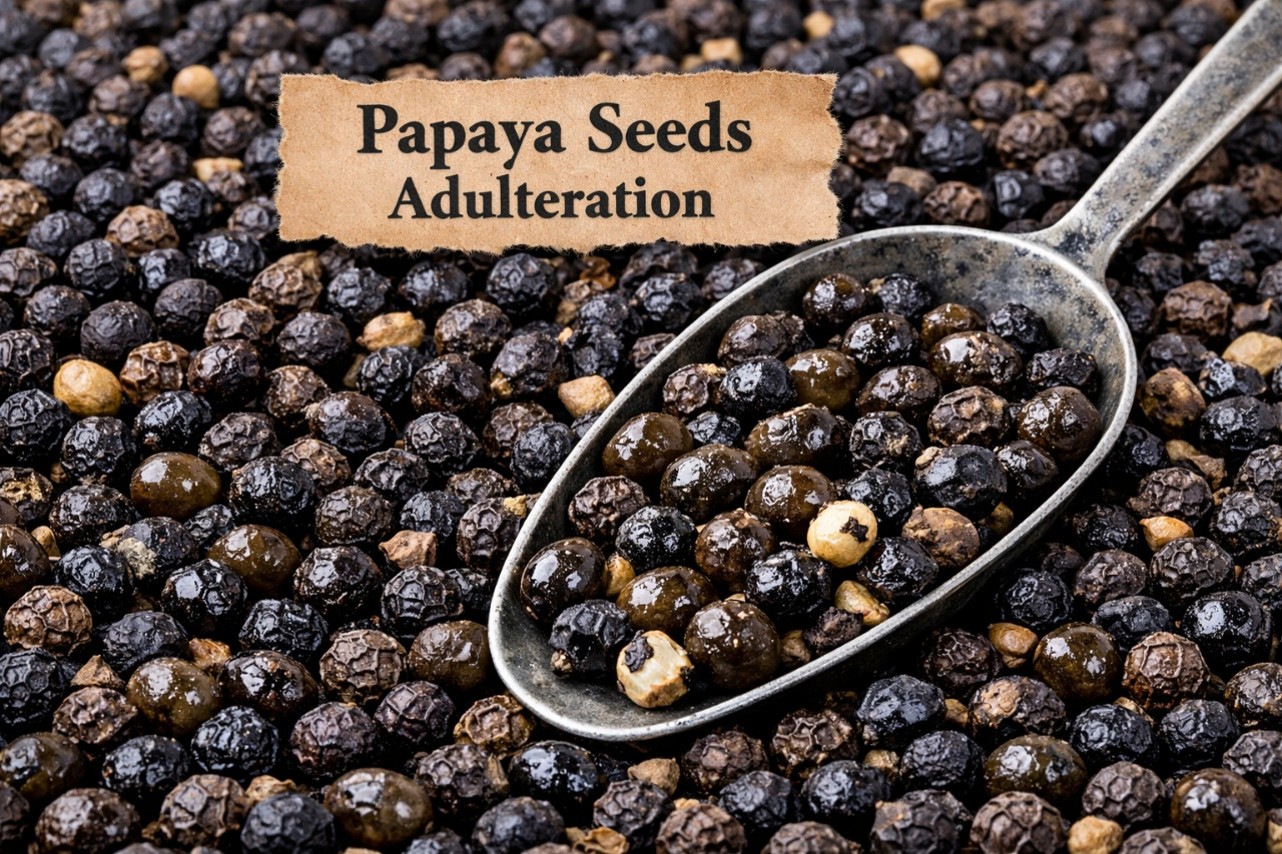
Black Pepper: A Classic Example of Adulteration
Food adulteration is not always about chemicals or colours.
One of the most frequently cited examples in food technology is the mixing of papaya seeds with black pepper.
One of the most frequently cited examples in food technology is the mixing of papaya seeds with black pepper. Since papaya seeds resemble peppercorns in appearance, visual identification may not always be easy for consumers.
Purchasing whole spices from reputable sources and established brands can help minimise the risk of such economic adulteration.
Ghee and Edible Oils: Trust Matters
Products such as ghee and edible oils present a different challenge.
Unlike spices or grains, many forms of adulteration in fats and oils cannot be detected easily through visual inspection. This is why purchasing from trusted brands and reliable suppliers becomes particularly important.
For edible oils, including coconut oil, adulteration is often difficult to detect through visual inspection or household methods. Many forms of adulteration can only be identified using specialised laboratory techniques.
Consumers should therefore rely on trusted brands, proper labelling, and authorised supply channels when purchasing edible oils.
In the case of ghee, unusually low prices should always prompt caution. Genuine ghee requires significant quantities of milk fat and therefore cannot be produced at unrealistically low costs.
Honey: Looking Beyond Marketing Claims
Honey is another product that often generates consumer concern. Various household methods are frequently promoted on social media as ways to determine purity. However, such methods are not scientifically reliable and should not be used as proof of adulteration.
Consumers should instead focus on purchasing honey from reputable manufacturers who maintain quality assurance systems and comply with regulatory requirements.

Food Grains and Pulses: The Importance of Visual Inspection
Sometimes, the simplest inspection methods are the most effective.
Before storing or cooking grains and pulses, consumers should check for:
- Stones and pebbles
- Excess dust
- Insect infestation
- Damaged grains
- Foreign seeds
- Signs of moisture or mould growth
Spending a few extra minutes inspecting grains can help prevent both quality issues and potential health risks.
Smart Shopping Practices to Reduce Risk
Since adulteration cannot usually be confirmed outside a laboratory, prevention remains the most effective approach for consumers.
As consumers, we can significantly reduce risk by following a few practical measures:
- Purchase food from trusted and reputable companies, brands, and authorised retailers.
- Be cautious of products that imitate well-known brands through similar names, packaging, colours, or logos.
- Read labels carefully and verify product information.
- Check the FSSAI licence number, ingredient list, manufacturing date, expiry date, and storage instructions.
- Avoid products sold at unusually low prices compared to similar products in the market.
- Prefer properly packaged products over unidentified loose products, particularly for high-risk categories such as milk products, spices, edible oils, and honey.
- Store food correctly after purchase and follow the manufacturer’s storage recommendations.
While labelling requirements and regulatory compliance are important, they do not eliminate the possibility of adulteration or misbranding. Therefore, purchasing from reputable and reliable sources remains one of the most effective ways to minimise risk.
These habits may seem simple, but collectively they form one of the strongest defences against food fraud.

What Should You Do If You Suspect Adulteration?
If you come across a food product that appears suspicious, avoid consuming it and retain the packaging whenever possible.
Consumers can report concerns to food safety authorities through the available complaint mechanisms and consumer grievance platforms. Reporting suspicious products helps regulators identify recurring issues and take appropriate action.
A Final Thought
Food adulteration is a challenge that cannot be addressed by regulators alone. Consumers, food businesses, scientists, and policymakers all have a role to play.
As a food scientist, I believe awareness remains one of the most powerful tools available to consumers. You do not need sophisticated laboratory equipment to become a smarter buyer. Sometimes, simply observing carefully, asking questions, reading labels, and purchasing from trusted sources can make a significant difference.
The goal is not to create fear around food, but to encourage informed choices.
Because when consumers become more aware, the entire food system becomes stronger, safer, and more accountable.


 Dr. Joseph Lewis


Add comment